
Car accidents happen fast. One moment you’re driving through Kansas City traffic, the next you’re dealing with a damaged car and uncertainty about what to do next. In those first few minutes and hours, the decisions you make can have a major impact on your health, your finances, and your ability to recover compensation for a car accident injury.
After a car accident with injuries, most people are dealing with shock, adrenaline, and stress. That combination makes it harder to think clearly. Unfortunately, insurance companies know this, and they often rely on those early mistakes to reduce or deny claims.
At Double Eagle Injury Law, our Kansas City car accident attorneys are ready to help. Our guide breaks down exactly what to do after a car accident to protect your health, preserve evidence, and avoid costly missteps.
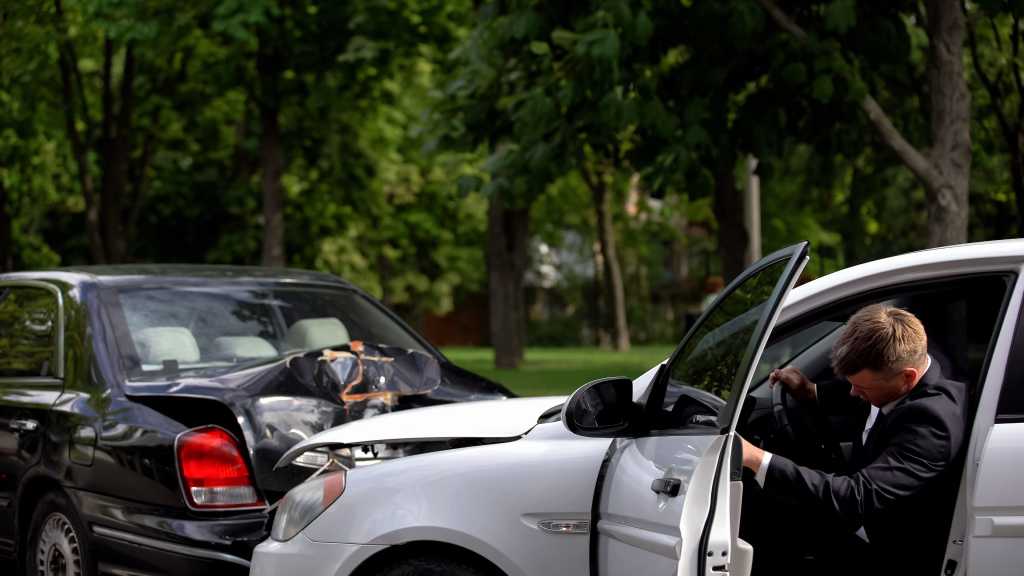
Step 1 — Get to Safety and Check for Injuries
Your top priority after any crash is your safety. If your vehicle is drivable, move it out of traffic and onto the shoulder or a nearby safe area. Turn on your hazard lights immediately to alert other drivers.
Then, check yourself and your passengers for injuries. After that, check on the occupants of the other vehicle.
- Call 911 if anyone is injured, reports pain, or if you are unsure
- Don’t try to diagnose injuries yourself
- Avoid moving anyone who appears seriously injured unless there is immediate danger
- Stay at the scene, as leaving can result in serious legal consequences
Even if the accident seems minor, adrenaline can mask pain. What feels like a small issue could be a broken bone, internal injuries, or a traumatic brain injury. Older adults and children are especially vulnerable to injuries that may not show symptoms right away.
Step 2 — Call the Police
In Missouri, most car accidents must be reported. Under RSMo § 300.110, any accident involving injury, death, or property damage over $500 must be reported to local authorities, which applies to nearly every car crash.
Call 911 and wait for law enforcement to arrive. Don’t agree to handle the situation privately, even if the other driver suggests it.
When speaking with the officer:
- Stick to the facts
- Don’t guess or speculate
- Don’t admit fault
- Provide clear, accurate information
Before the officer leaves, make sure to:
- Ask for their name and badge number
- Get the accident report number
If Kansas City police cannot respond, you may need to file a report at a patrol station or submit Form 1140 to the Missouri Department of Revenue within 30 days.
Step 3 — Document the Scene Thoroughly
Evidence disappears quickly after a crash. Vehicles are moved, debris is cleared, and memories fade. That’s why documenting the scene immediately is critical.
Use your phone to take photos and videos of:
- Damage to all vehicles from multiple angles
- License plates
- The other driver’s insurance card and driver’s license
- Road conditions, skid marks, and traffic signals
- Weather conditions
- Visible injuries
- Wide shots of the entire scene
You also need to get the names and phone numbers of any witnesses who saw the accident. If they don’t want to give a written statement, their contact information is still valuable. Your attorney can follow up later.
As soon as possible, write down your own account of what happened. Memory can fade quickly after an adrenaline spike, often within hours.
Step 4 — Exchange Information Without Admitting Fault
You’re required to exchange contact information with the other driver, but you should keep communication limited and factual.
Be sure to exchange:
- Full name, address, and phone number
- Driver’s license number
- Insurance company and policy number
- Vehicle make, model, year, and license plate
Be careful about what you say, as statements made at the scene can be used against you later. Avoid saying things like:
- “I’m sorry.”
- “I didn’t see you.”
- “I’m fine.”
- Any details about speed or distraction
Missouri follows a pure comparative negligence rule. This means your compensation can be reduced based on your percentage of fault. Even a small statement can impact your claim, and insurance adjusters pay close attention to these details.
Step 5 — Seek Medical Attention, Even If You Feel Fine
One of the most important steps to take after a car accident is getting medical care right away. Visit an emergency room, urgent care center, or your primary care doctor the same day.
Delaying medical care creates two major problems:
- It weakens your injury claim
- It puts your health at risk
Insurance companies often argue that delayed treatment means the injury was not serious or was unrelated to the crash. Your medical records create the link between the accident and your injury. Without that documentation, your claim becomes much harder to prove.
In addition, many car accident injuries don’t show symptoms immediately. These can include:
- Concussions and traumatic brain injuries
- Soft tissue injuries
- Internal bleeding
In the days after the accident, ask family members or coworkers to watch for changes in your behavior, memory, or mood. These can be signs of a traumatic brain injury after a car accident, which victims often don’t recognize on their own.
Step 6 — Notify Your Insurance Company Carefully
Most insurance policies require prompt reporting, often within 24 to 48 hours of the accident. Notify your insurance company of the basic facts, such as:
- Date and time of the accident
- Location
- Vehicles involved
Be careful with what you say beyond that, as insurance companies will try to use whatever you say against you. Adjusters are trained to ask questions in ways that reduce liability or shift blame. Do not:
- Give a recorded statement to the other driver’s insurance company
- Discuss injuries before they are fully diagnosed
- Accept a settlement offer too early
- Sign any release forms
What NOT to Do After a Car Accident
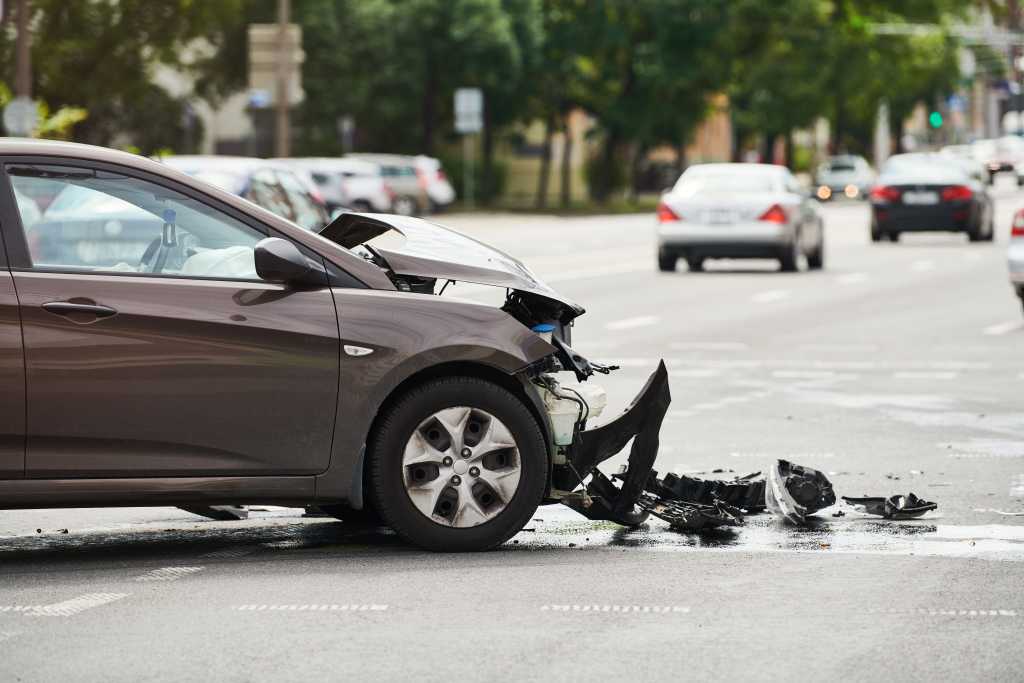
Avoiding missteps is just as important as taking the right steps. Many claims are weakened by actions taken in the first 24 hours.
After a car accident, be careful not to:
- Leave the scene of the accident
- Admit fault, even partially
- Give recorded statements without legal advice
- Post about the accident on social media
- Skip medical care
- Accept a quick settlement
- Assume you have plenty of time
These missteps can significantly reduce your compensation or even prevent recovery altogether.
What to Do After a Minor Car Accident
The term “minor accident” can be misleading. Even low-speed collisions can result in serious injuries.
Under Missouri law, accidents with more than $500 in damage must still be reported. Most fender-benders meet this threshold.
After a minor crash:
- Exchange information
- Document the scene
- Seek medical attention
- Report the accident to your insurance company
Don’t agree to handle things privately. The other driver may later dispute fault or claim injuries.
Insurance companies also use phrases like “minor accident” to justify paying less. Your injuries deserve proper evaluation regardless of how bad the crash initially looks.
How Long Do You Have to File a Car Accident Claim?
The deadline to file a claim after an accident varies depending on where the accident occurred:
- Missouri: Under RSMo § 516.120, most personal injury claims must be filed within five years.
- Kansas: Under KSA § 60-513, the deadline is typically two years.
If your accident occurred on the Kansas side of the metro, such as Overland Park or Lenexa, the shorter timeline applies.
However, there are exceptions to these rules depending on the circumstances:
- Claims involving government entities may require notice within 90 days.
- Some injuries may not appear immediately, and the discovery rule may change when the clock starts.
The deadlines vary based on the facts of your case. It is important to speak with a Kansas City car accident attorney before assuming how much time you have.
Protect Your Health and Your Claim
Knowing what to do after a car accident can make a significant difference in your recovery. The steps you take immediately after a car accident affect your safety, your medical outcome, and your ability to recover compensation.
At Double Eagle Injury Law, we’ve seen how small mistakes early on can impact otherwise valid claims. Our Missouri car accident lawyers are ready to protect your rights and fight for the compensation you deserve.
If you were injured in a car accident, we’re here to help. Get in touch with our attorneys today to schedule a free consultation and take the first step towards recovery.
FAQs About Car Accidents in Kansas City
What is the first thing you should do after a car accident?
Get to safety and call 911 as soon as possible. Your health and safety should always come first, even before documenting the scene or speaking with anyone involved.
What should you not say at the scene of a car accident?
Avoid statements like “I’m sorry,” “I didn’t see you,” or “I’m fine,” as they can be used against you later. Even casual comments can be interpreted as admitting fault or minimizing your injuries.
Do you have to call the police after a minor accident?
In most cases, yes, especially if any injuries or property damage exceed $500. If police cannot respond, you may still be required to file a report yourself within a set timeframe.
What if you feel fine after the accident?
You should still seek medical attention the same day, even if you don’t feel immediate pain. Many car accident injuries, including concussions and soft tissue damage, can take hours or days to appear.
What should you do after a minor car accident in Kansas City?
Treat it the same as any other accident by documenting the scene, exchanging information, and reporting it properly. Even low-speed collisions can result in injuries and complications that aren’t immediately obvious.